

Buying a property is one of the biggest financial decisions in life. Whether you are purchasing an apartment, villa, or residential plot, understanding the legal documents involved is essential to ensure a safe and hassle-free transaction.
Two important documents in any property purchase are the Sale Agreement and Sale Deed. Although they are closely related, they serve different purposes in a real estate transaction. Knowing the difference between a Sale Agreement and Sale Deed can help homebuyers avoid legal complications and make informed property investment decisions.
In this blog, let’s understand what these documents mean, their key differences, and why both are important when buying property in Bangalore.
What Is a Sale Agreement?
A Sale Agreement, also known as an Agreement to Sell, is a legal document signed between the buyer and seller before the final transfer of property ownership.
It outlines the terms and conditions agreed upon by both parties, including the property price, advance payment, payment schedule, possession date, and other obligations.
A Sale Agreement acts as a commitment that the seller agrees to sell the property and the buyer agrees to purchase it under the specified conditions.
Key details included in a Sale Agreement:
- Names and details of the buyer and seller.
- Complete property description and location.
- Agreed property purchase price.
- Advance payment or booking amount.
- Payment schedule and balance amount.
- Expected date of property registration and possession.
- Terms and conditions for cancellation or breach of agreement.
- Responsibilities of both parties.
Important: A Sale Agreement does not, by itself, transfer ownership of the property to the buyer. It establishes the contractual obligation to complete the sale.
What Is a Sale Deed?
A Sale Deed is the final legal document that officially transfers ownership of a property from the seller to the buyer.
It is executed after the agreed payment conditions are fulfilled and the parties are ready to complete the property transaction. The Sale Deed must be properly stamped and registered with the relevant Sub-Registrar Office to legally record the transfer of ownership.
Once the Sale Deed is registered, the buyer becomes the legal owner of the property, subject to applicable laws and the validity of the transaction.
Key details included in a Sale Deed:
- Complete details of the buyer and seller.
- Property identification and ownership details.
- Final sale consideration and payment details.
- Confirmation of payment and transfer of ownership.
- Property boundaries, measurements, and description.
- Details of existing encumbrances, if any.
- Date of possession and transfer.
- Signatures of the parties and witnesses.
A registered Sale Deed is one of the most important property ownership documents and should be preserved safely for future legal and financial requirements.
Also Read: The Psychology Behind the ‘One Last Visit’ Before Booking
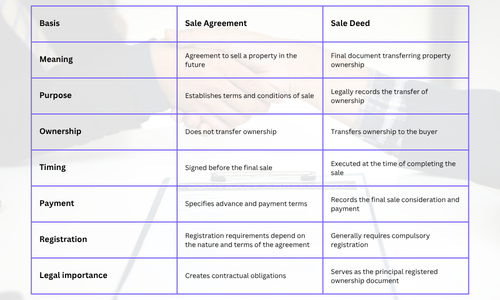
Sale Agreement vs Sale Deed: Key Differences
Although both documents are important during a property purchase, their legal purpose and significance differ.
Is a Sale Agreement Legally Binding?
Yes. A properly executed Sale Agreement is legally binding on the parties involved. If either party fails to fulfil the agreed terms, the affected party may have legal remedies, depending on the contract and applicable law.
For example, if a buyer makes an advance payment and the seller later refuses to proceed with the sale without a valid contractual reason, the buyer may seek appropriate legal remedies.
However, signing a Sale Agreement alone does not make the buyer the legal owner of the property.
Is Registration of a Sale Agreement Mandatory?
The registration requirements for a Sale Agreement depend on its nature, terms, and applicable state laws.
Under the Registration Act, 1908, certain agreements relating to immovable property may require registration. In addition, agreements that create rights or interests in property may attract specific registration requirements.
In Karnataka, buyers should verify the applicable stamp duty and registration requirements before executing an agreement. Consulting a qualified property lawyer can help avoid documentation-related complications.
Why Is a Sale Deed Important When Buying Property in Bangalore?
When purchasing property in Bangalore, completing the Sale Deed registration is a crucial step in establishing legal ownership.
Whether you are investing in an apartment in Whitefield, buying a villa in Sarjapur Road, or purchasing a residential plot in North Bangalore, ensure that the property transaction is supported by proper legal documentation.
Before registering the Sale Deed, buyers should check:
- Title Verification: Confirm that the seller has a valid and marketable title to the property.
- Encumbrance Certificate (EC): Check for registered transactions, mortgages, and other recorded encumbrances.
- Khata and Property Records: Verify the relevant property records and applicable approvals.
- Approved Building Plans: For apartments and villas, check the applicable building approvals and project permissions.
- Outstanding Dues: Ensure that property taxes and other applicable dues are cleared.
- Sale Deed Details: Carefully verify the property description, measurements, boundaries, buyer details, and payment information.
Taking these precautions can help reduce the risk of property disputes and protect your investment.
Can a Buyer Sell a Property Without a Registered Sale Deed?
Generally, no. A Sale Agreement alone does not establish ownership and cannot be treated as a substitute for a registered Sale Deed.
Under Section 54 of the Transfer of Property Act, 1882, a contract for the sale of immovable property does not, by itself, create any interest in or charge on the property.
Therefore, buyers should ensure that the final Sale Deed is properly executed and registered before treating the property as legally transferred to them.
Final Thoughts
Understanding the difference between a Sale Agreement and Sale Deed is essential for anyone planning to buy property in India. While a Sale Agreement establishes the terms of the transaction, the Sale Deed completes the transfer of ownership.
From verifying property documents to completing registration, every step matters when making a real estate investment. Taking professional guidance and conducting proper legal due diligence can help ensure a secure property purchase.
Planning to buy your dream property in Bangalore?
At FourQuarters, we help homebuyers explore verified property options, connect with trusted builders, and navigate their property-buying journey with greater clarity and confidence.
Whether you are looking for apartments, villas, residential plots, or investment opportunities, our team is here to help you make informed real estate decisions.
FourQuarters – Where Vision Meets Realty.