

If you’ve ever explored apartment listings or property brochures, you’ve probably come across terms like Carpet Area, Built-Up Area, and SBA (Super Built-Up Area). For many homebuyers—especially first-time buyers—these terms can feel confusing. Yet, understanding them is crucial because they directly impact how much space you actually get for the price you pay.
Among these, Super Built-Up Area (SBA) is one of the most commonly mentioned figures in real estate marketing—but also one of the most misunderstood.
Let’s break down what SBA really means and why it matters when buying a home.
What Is Super Built-Up Area (SBA)?
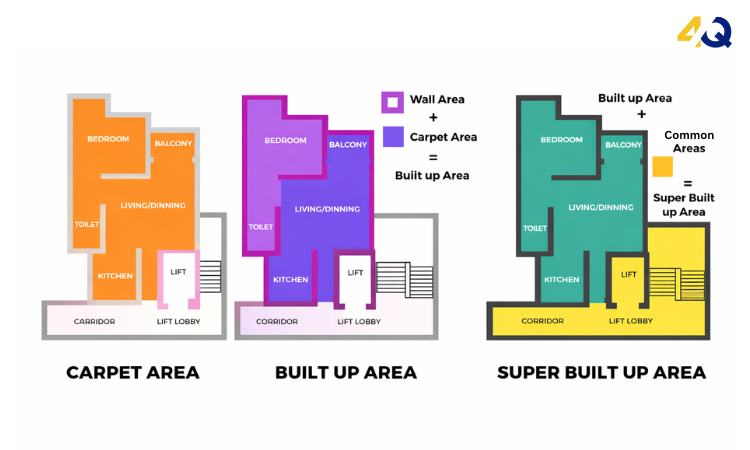
“Super Built-Up Area” refers to the total saleable area of an apartment, which includes not only your private apartment space but also a share of the common areas in the building.
In simple terms, SBA is the area on which the price of the apartment is usually calculated by developers.
This includes:
- Carpet area (actual usable space inside your apartment)
- Built-up area (walls and internal partitions)
- Proportionate share of common areas
Common areas typically include:
- Lobbies and corridors
- Staircases
- Elevators
- Clubhouse areas
- Amenities like gyms, swimming pools, or lounge spaces
Because of these additions, the Super Built-Up Area is always larger than the carpet area.
SBA vs Carpet Area: What’s the Difference?
This is where most buyers get confused.
Carpet Area refers to the actual usable floor space inside your apartment—the area where you can place furniture or walk around.
On the other hand, SBA includes additional shared spaces that residents collectively use.
For example:
- Carpet Area: 800 sq. ft.
- Built-Up Area: 950 sq. ft.
- Super Built-Up Area: 1200 sq. ft.
In this example, the buyer is paying for 1200 sq. ft., but the actual usable space inside the apartment is closer to 800 sq. ft.
This difference is often referred to as “loading.”
What Is ‘Loading’ in Apartments?
“Loading” refers to the percentage of common areas added to the carpet area to arrive at the Super Built-Up Area.
Most residential projects have loading between 25% and 40%, depending on the developer, amenities, and building design.
Projects with larger clubhouses, luxury amenities, and spacious lobbies often have higher loading percentages.
While higher loading may mean less private space, it can also indicate better shared amenities and lifestyle facilities.
Also Read: What is UDS in Real Estate? A Complete Guide for Homebuyers in India
Why Do Developers Use Super Built-Up Areas?
Developers use SBA primarily because apartment projects include multiple shared spaces that benefit residents collectively.
Facilities such as clubhouses, landscaped gardens, security areas, and recreational spaces add value to the overall living experience.
Since these areas are part of the development cost, they are distributed proportionately across all apartments through the Super Built-Up Area.
This approach allows developers to recover the cost of infrastructure and amenities while maintaining a standardized pricing structure.
Why Buyers Should Pay Attention to SBA
While SBA is the standard measurement used for pricing, buyers should always understand how much of that space is actually usable.
Two projects with the same SBA can have very different carpet areas depending on the loading percentage.
For example:
Project A
- SBA: 1200 sq. ft.
- Carpet Area: 850 sq. ft.
Project B
- SBA: 1200 sq. ft.
- Carpet Area: 780 sq. ft.
Even though both apartments are sold as 1200 sq. ft. units, Project A offers more usable living space.
This is why comparing carpet area is essential when evaluating different properties.
How Regulations Help Improve Transparency
In recent years, real estate regulations have aimed to improve transparency for homebuyers.
Under the Real Estate (Regulation and Development) Act, 2016, developers must clearly specify the carpet area of apartments in project details and sales agreements.
This ensures that buyers have better clarity about the actual usable space they are purchasing.
Many developers now highlight both carpet area and SBA in their brochures to maintain transparency and build buyer trust.
Final Thoughts
Super Built-Up Area is an important concept in real estate because it represents the total saleable space used to price an apartment. However, understanding how it differs from the carpet area can help buyers make more informed decisions.
When evaluating a property, don’t just look at the total square footage advertised in the brochure. Instead, ask questions such as:
- What is the carpet area of the apartment?
- What is the loading percentage?
- How much of the space is actually usable?
By understanding these aspects, homebuyers can compare properties more effectively and ensure they get the best value for their investment.
At FourQuarters Real Estate Advisory, we believe informed buyers make smarter decisions. Through insights like these, we aim to simplify complex real estate concepts and help homebuyers navigate the property market with confidence.