
In today’s rapidly evolving urban landscape, real estate development is no longer just about land availability—it’s about smart utilization. One of the most important yet often misunderstood concepts in urban planning is Transferable Development Rights (TDR). Whether you’re a property investor, developer, or homebuyer in cities like Bangalore, understanding TDR can give you a significant edge.
What Is TDR in Real Estate? (Meaning)
Transferable Development Rights (TDR) is a mechanism that allows landowners to transfer their unused development potential (built-up area) from one property to another.
In simple terms, if a landowner cannot fully utilize the permissible construction area (due to regulations, road widening, or public infrastructure projects), they are compensated with TDR. This can then be sold or used elsewhere.
👉 Example:
If a government acquires part of your land for a road project, instead of monetary compensation, you may receive TDR certificates, which can be used or sold to developers.
Why TDR Is Important in Real Estate
TDR plays a crucial role in balancing urban development and infrastructure growth. It helps:
- Reduce direct financial burden on government projects
- Encourage planned city expansion
- Maximize land use efficiency
- Promote sustainable development
Cities like Bangalore are increasingly relying on TDR to manage rapid urbanization.
Types of TDR in Real Estate
Understanding the different types of TDR helps investors and developers make informed decisions:
1. Road Widening TDR
Issued when land is acquired for road expansion or infrastructure upgrades.
2. Reserved Land TDR
Given when land is reserved for public purposes like parks, schools, or civic amenities.
3. Slum Rehabilitation TDR
Provided to developers who undertake redevelopment of slum areas.
4. Agricultural to Urban TDR
Used when agricultural land is converted or repurposed for urban development.
Key Benefits of TDR
1. Better Land Utilization
Developers can increase built-up area in high-demand zones by purchasing TDR.
2. Cost-Effective Development
Instead of buying expensive land, developers can use TDR to expand projects.
3. Faster Infrastructure Growth
Governments can execute projects like metro lines, roads, and flyovers without heavy compensation costs.
4. Increased Property Value
Areas where TDR can be utilized often see higher real estate demand and appreciation.
5. Investment Opportunity
TDR itself becomes a tradable asset, opening new avenues for real estate investors.
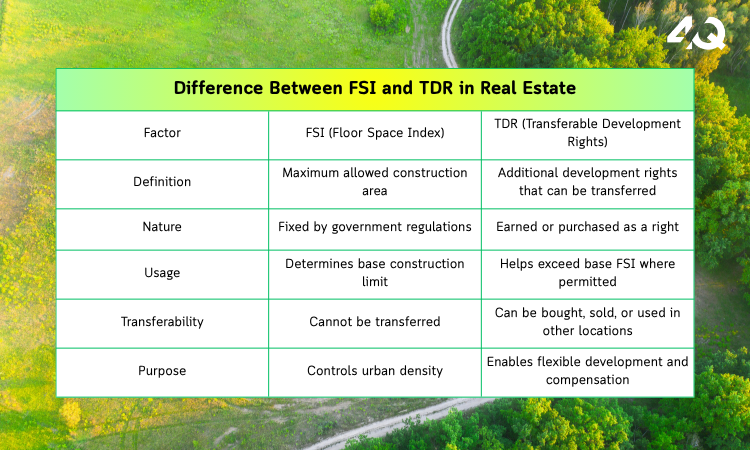
Also Read: Floor Space Index (FSI) in India: Definition, Formula & City-Wise Comparison
TDR in Bangalore Real Estate
In Bangalore, TDR is regulated by local authorities like BBMP and BDA. With ongoing infrastructure projects—such as metro expansion, peripheral ring roads, and smart city initiatives—TDR is becoming increasingly relevant.
For developers and investors looking at real estate in Bangalore, understanding TDR can help identify:
- High-growth zones
- Future appreciation corridors
- Better ROI opportunities
Things to Consider Before Buying TDR
While TDR offers multiple advantages, it’s important to evaluate:
- Zoning regulations
- Receiving zones eligibility
- Market demand for additional FAR (Floor Area Ratio)
- Legal verification of TDR certificates
Proper due diligence ensures risk-free investment.
Conclusion
As cities continue to grow vertically and infrastructure demands increase, Transferable Development Rights (TDR) is becoming a powerful tool shaping the future of urban real estate. For investors and developers, it offers flexibility, cost advantages, and long-term growth potential.
At FourQuarters, we help you stay ahead of such evolving real estate trends—guiding you toward smarter property investments in Bangalore’s most promising locations.