

For decades, homebuyers evaluated properties based on a simple formula: location, size, and price. But as cities expand and traffic congestion worsens, a new factor is rapidly influencing real estate decisions—time.
Today, people are increasingly asking a different question before buying a home:
“Can I access everything I need within 15 minutes?”
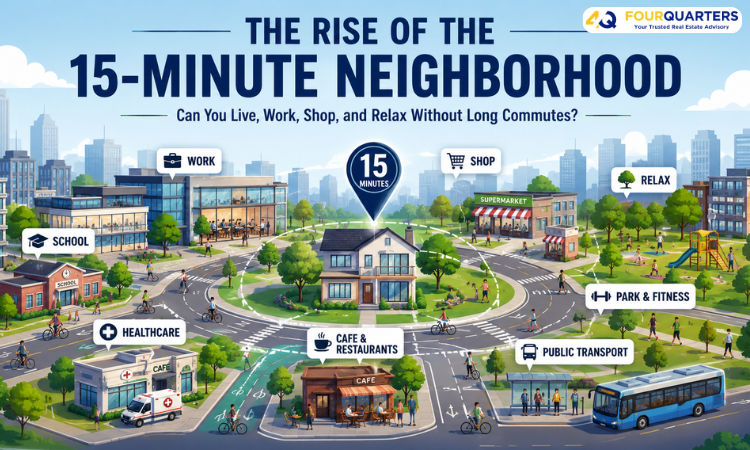
This idea has given rise to the concept of the 15-minute neighborhood, an urban planning approach where residents can live, work, shop, study, exercise, and socialize within a short walk, cycle ride, or drive from their homes.
As India’s major cities continue to grow, the demand for well-connected, self-sufficient communities is transforming the way people think about real estate investment, residential property, and urban living.
What Is a 15-Minute Neighborhood?
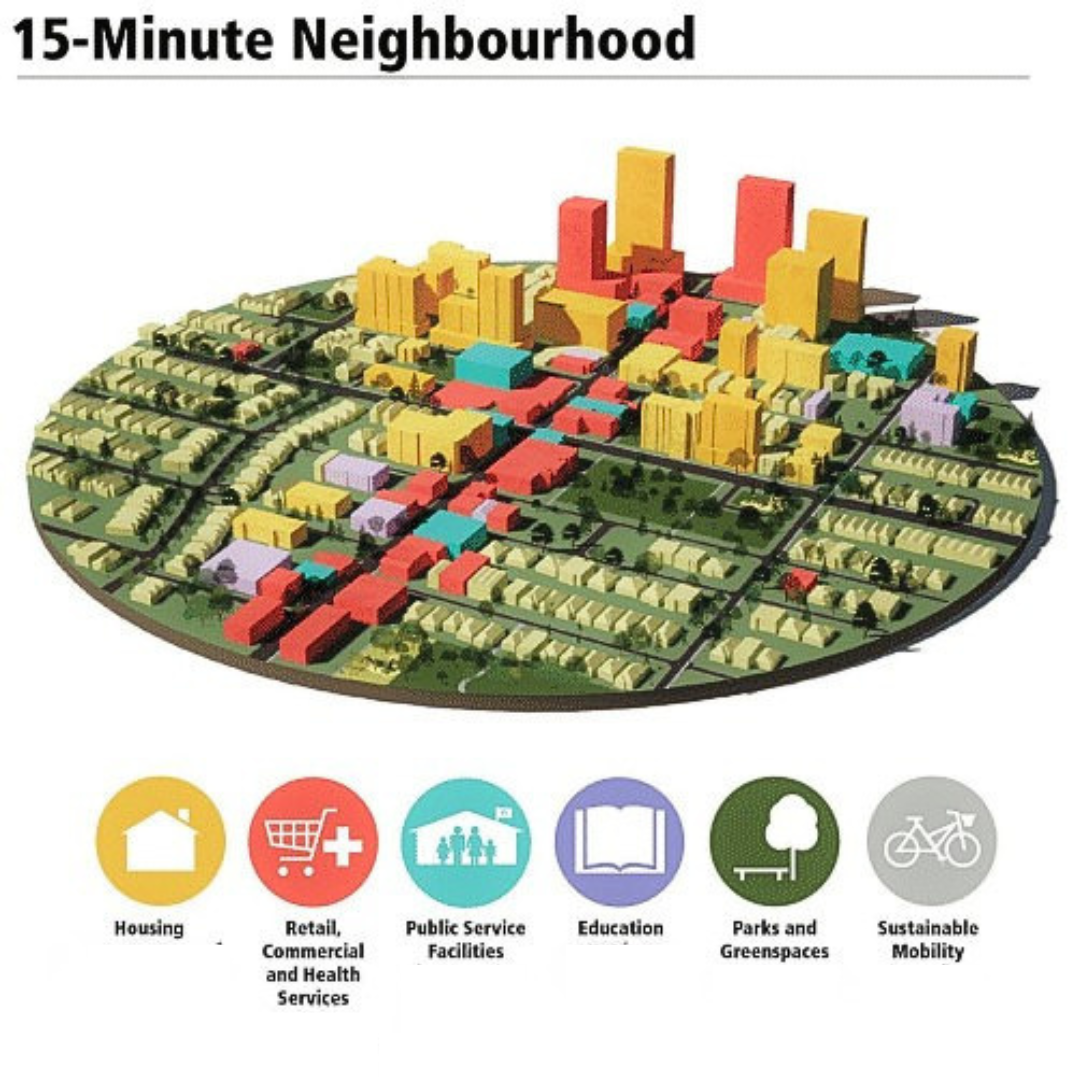
A 15-minute neighborhood is a community designed to ensure that essential daily needs are accessible within approximately 15 minutes from home.
These needs typically include:
- Workspaces and offices
- Grocery stores and supermarkets
- Schools and educational institutions
- Healthcare facilities
- Parks and recreational spaces
- Restaurants and cafés
- Public transportation
- Fitness centers and sports facilities
The concept aims to reduce dependency on long commutes while improving quality of life, sustainability, and community engagement.
In simple terms, it’s about spending less time in traffic and more time living.
Why Is the 15-Minute Neighborhood Gaining Popularity?
1. Commute Fatigue Is Real
One of the biggest challenges in rapidly growing cities is the amount of time people spend commuting.
Whether it’s traveling to work, dropping children at school, visiting healthcare facilities, or running daily errands, hours can disappear in traffic every week.
Homebuyers are beginning to recognize that a shorter commute isn’t just convenient—it directly impacts productivity, mental well-being, and family time.
As a result, properties near metro stations, mixed-use developments, and well-planned residential communities are seeing increasing demand.
2. Convenience Has Become the New Luxury
Luxury is no longer defined solely by larger homes or premium amenities.
For many homebuyers, true luxury means:
- Spending less time on the road
- Having schools nearby
- Accessing healthcare quickly
- Reaching workplaces with ease
- Being close to shopping and entertainment
This shift is influencing demand across the Indian real estate market, particularly in emerging urban corridors and integrated townships.
3. Remote and Hybrid Work Have Changed Priorities
The rise of remote and hybrid work models has altered how people use their neighborhoods.
Many professionals no longer need to travel across the city every day. Instead, they prefer communities that offer:
- Co-working spaces
- Cafés with work-friendly environments
- Recreational areas
- Reliable infrastructure
As a result, homebuyers are evaluating neighborhoods based on lifestyle convenience rather than just proximity to traditional business districts.
Also Read: Work-Life Balance in Bengaluru: Why Living Close to Work Is Shaping Homebuying Decisions
How the 15-Minute Neighborhood Benefits Homebuyers
Improved Quality of Life
A shorter commute means more time for family, hobbies, fitness, and relaxation.
Many homeowners find that proximity to everyday essentials significantly reduces stress and improves work-life balance.
Better Real Estate Value
Properties located in well-connected neighborhoods often enjoy stronger demand and long-term appreciation.
Areas that combine residential, commercial, educational, and recreational facilities tend to remain attractive even as market conditions change.
For investors, this creates opportunities for both capital appreciation and rental demand.
Stronger Community Connections
When people walk, cycle, and interact within their neighborhoods, communities naturally become more vibrant.
Local businesses thrive, public spaces become active, and residents develop stronger social connections.
This sense of community is increasingly becoming a deciding factor for modern homebuyers.
What Makes a Neighborhood Truly “15-Minute Ready”?
Not every residential area qualifies as a 15-minute neighborhood.
Some key indicators include:
Connectivity
Easy access to:
- Metro stations
- Public transportation
- Major road networks
- Cycling and pedestrian infrastructure
Essential Services
Availability of:
- Schools
- Hospitals
- Pharmacies
- Grocery stores
- Banks
Lifestyle Infrastructure
Access to:
- Parks
- Fitness centers
- Restaurants
- Entertainment zones
- Community spaces
Employment Opportunities
Proximity to:
- IT parks
- Business districts
- Industrial corridors
- Co-working hubs
The most successful neighborhoods integrate these elements rather than relying on any single factor.
The Growing Relevance of 15-Minute Neighborhoods in Bengaluru
Cities like Bengaluru are witnessing rapid outward expansion, creating new residential hubs beyond traditional city centers.
As infrastructure projects such as metro expansions, suburban rail networks, peripheral roads, and expressways continue to develop, buyers are increasingly looking for locations that combine connectivity with convenience.
The focus is gradually shifting from simply owning property in a prime location to living in an ecosystem that supports everyday life efficiently.
This trend is also contributing to the growing popularity of plotted developments, integrated townships, and emerging suburban corridors where planning can be implemented more effectively.
The Future of Urban Living
The rise of the 15-minute neighborhood reflects a broader shift in how people define value in real estate.
While location will always matter, accessibility, convenience, and quality of life are becoming equally important considerations.
The future homebuyer isn’t just purchasing a property—they’re choosing a lifestyle.
A neighborhood that reduces travel time, improves daily convenience, and supports community living may ultimately prove more valuable than one that simply offers a prestigious address.
Conclusion
As urban lifestyles evolve, the 15-minute neighborhood is emerging as one of the most influential trends shaping the future of real estate. Buyers are prioritizing convenience, connectivity, and community-driven living more than ever before.
At FourQuarters, we closely track evolving homebuyer preferences, infrastructure developments, and real estate trends that shape investment decisions. As cities continue to grow, understanding concepts like the 15-minute neighborhood can help buyers make smarter choices that deliver not just property ownership, but a better quality of life.

One Comment