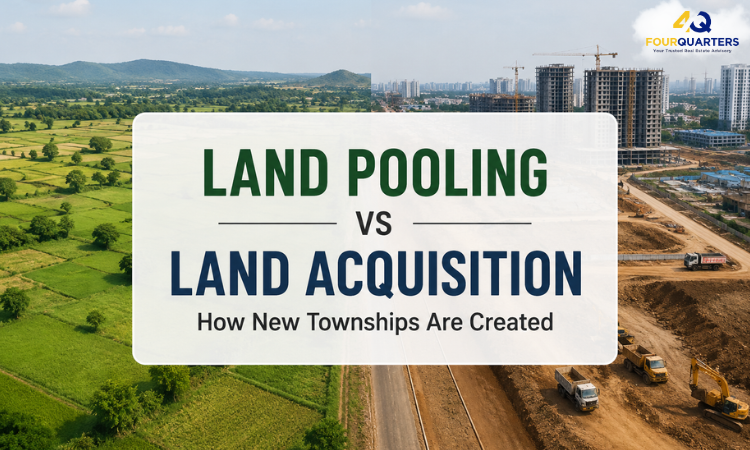

As cities continue to grow, the demand for housing, commercial spaces, and infrastructure is increasing rapidly. This has made township development one of the most important aspects of modern urban development. But have you ever wondered how vast stretches of farmland or open land transform into thriving residential communities with roads, parks, schools, and shopping centers?
The answer often lies in two key land assembly methods – Land Pooling and land acquisition. While both are used to create space for real estate development, they differ significantly in how land is obtained, developed, and returned to stakeholders.
Understanding these approaches can help homebuyers, investors, and landowners make informed decisions, especially in rapidly expanding cities like Bengaluru.
What is Land Acquisition?
Land acquisition is a process where the government or an authorized development authority acquires privately owned land for public infrastructure or development projects. In return, landowners receive monetary compensation based on applicable laws and market valuations.
Once the land is acquired, ownership is transferred completely to the acquiring authority, which then develops it for its intended purpose.
This method is commonly used for projects such as the following:
- Highways and expressways
- Metro rail corridors
- Airports
- Industrial parks
- Public infrastructure projects
Advantages of Land Acquisition
- Enables faster execution of large infrastructure projects.
- Ensures continuous land parcels for roads and utilities.
- Supports essential public infrastructure and economic development.
Challenges
Although compensation is provided, some landowners may feel the market value does not fully reflect the future potential of their land. In certain cases, disputes over valuation or rehabilitation can delay projects.
Also Read: Transit-Oriented Development (TOD) – Homes Around Metro Lines in Bangalore
What is Land Pooling?
Unlike acquisition, Land Pooling is a collaborative development model. Instead of selling their land, multiple landowners voluntarily contribute their plots to a common land pool.
The development authority then plans the entire area by building roads, drainage systems, parks, public spaces, and utility infrastructure. After development is completed, each participating landowner receives a smaller portion of developed land.
Although the returned plot is smaller, its value is often significantly higher due to improved infrastructure and planned urban amenities.
This approach has become increasingly popular for large-scale township development, where landowners become stakeholders in the area’s long-term growth instead of simply selling their land.
Land Pooling vs Land Acquisition: Key Differences
Although both methods aim to facilitate urban development, their approaches and outcomes are quite different.
| Feature | Land Pooling | Land Acquisition |
|---|---|---|
| Ownership | Landowners remain stakeholders | Ownership transfers to the government |
| Compensation | Developed plots are returned | Monetary compensation is paid |
| Value Appreciation | Owners benefit from future appreciation | Future appreciation belongs to the acquiring authority |
| Development Model | Collaborative | Government-led |
| Best Suited For | Large integrated townships | Public infrastructure projects |
Why Land Pooling is Transforming Township Development
The growing popularity of Land Pooling is changing how cities expand. Instead of displacing landowners, it encourages them to participate in development while sharing the benefits of urban growth.
Some key advantages include the following:
Better Planned Communities
Since development is planned for an entire region rather than individual plots, the result is organized neighborhoods with wider roads, green spaces, schools, healthcare facilities, and commercial zones.
Higher Land Value
Once infrastructure is completed, the returned plots often experience substantial appreciation, creating wealth for original landowners.
Sustainable Urban Expansion
Land pooling promotes systematic urban development, reducing unplanned growth and improving infrastructure efficiency.
Win-Win for Developers and Landowners
Developers receive large contiguous land parcels for construction, while landowners continue to benefit from the area’s future growth.
Bengaluru: A City Shaped by Urban Expansion
As India’s technology capital continues to attract businesses and professionals, Bengaluru urban expansion has accelerated beyond the city’s traditional boundaries.
Areas that were once agricultural villages are now emerging as vibrant residential and commercial hubs. This rapid transformation has fueled Bangalore real estate growth, creating opportunities for integrated townships that offer modern infrastructure and lifestyle amenities.
Many experts believe that future Bengaluru township development will increasingly rely on planned land assembly models such as Land Pooling, enabling authorities to create sustainable urban communities while ensuring better participation from landowners.
The rise of new townships in Bengaluru reflects this shift toward organized development. These projects typically include residential neighborhoods, schools, hospitals, retail spaces, parks, and office zones within a single master-planned community, offering residents convenience and a higher quality of life.
Why Investors Should Understand These Models
Whether you’re purchasing a home or investing in land, understanding how an area is being developed can provide valuable insights into its long-term potential.
Regions undergoing township development through Land Pooling often witness the following:
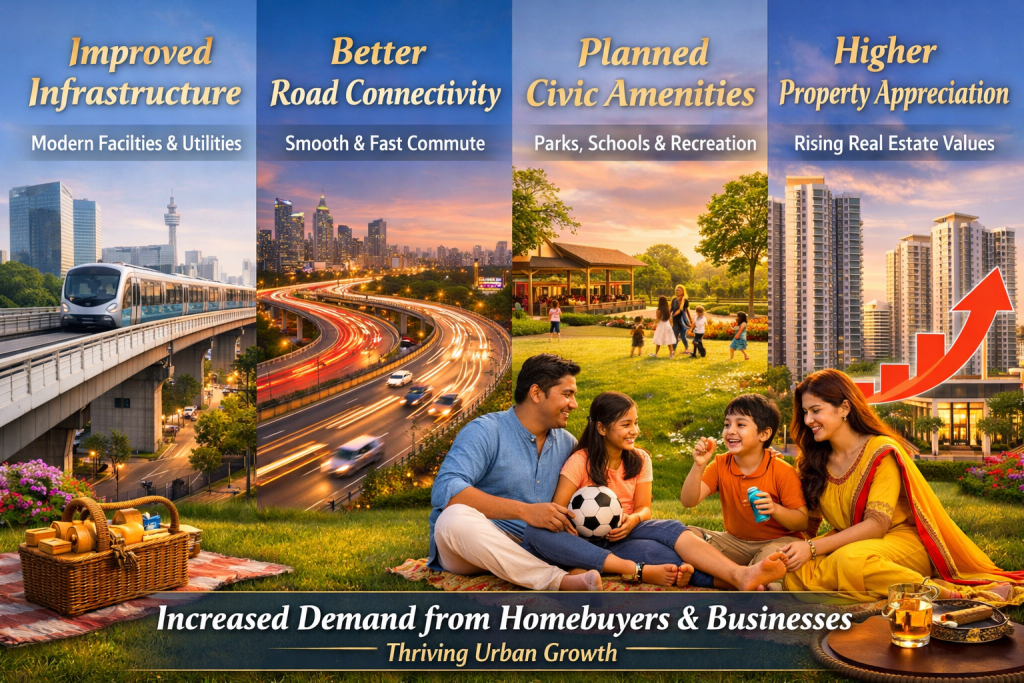
- Improved infrastructure
- Better road connectivity
- Planned civic amenities
- Higher property appreciation
- Increased demand from homebuyers and businesses
Meanwhile, infrastructure created through Land Acquisition, such as highways, metro lines, and industrial corridors, can also drive significant appreciation in surrounding real estate markets.
Recognizing these development patterns helps investors identify emerging growth corridors before they become established hotspots.
Conclusion
Every modern city begins with thoughtful planning, and both Land Pooling and Land Acquisition play a crucial role in shaping the communities of tomorrow. While land acquisition supports essential infrastructure, land pooling encourages collaborative growth, creating well-planned townships that benefit both landowners and future residents.
As Bengaluru township development continues to redefine the city’s landscape, understanding these land development models can help buyers and investors make smarter real estate decisions. If you’re looking to explore emerging opportunities, stay informed about Bangalore real estate growth, or discover promising new townships in Bengaluru, FourQuarters provides valuable insights and guidance to help you navigate the evolving real estate market with confidence.